
Collision Center 1 Golden Valley is publishing consumer guidance that breaks a collision repair estimate into five core areas: damage and labor, parts, refinishing, supplemental changes, and vehicle-specific procedures. The October resource is intended to help drivers understand what individual estimate lines represent instead of evaluating a repair plan only by its total cost.
Information about the facility is available through the Collision Center 1 Golden Valley location page.
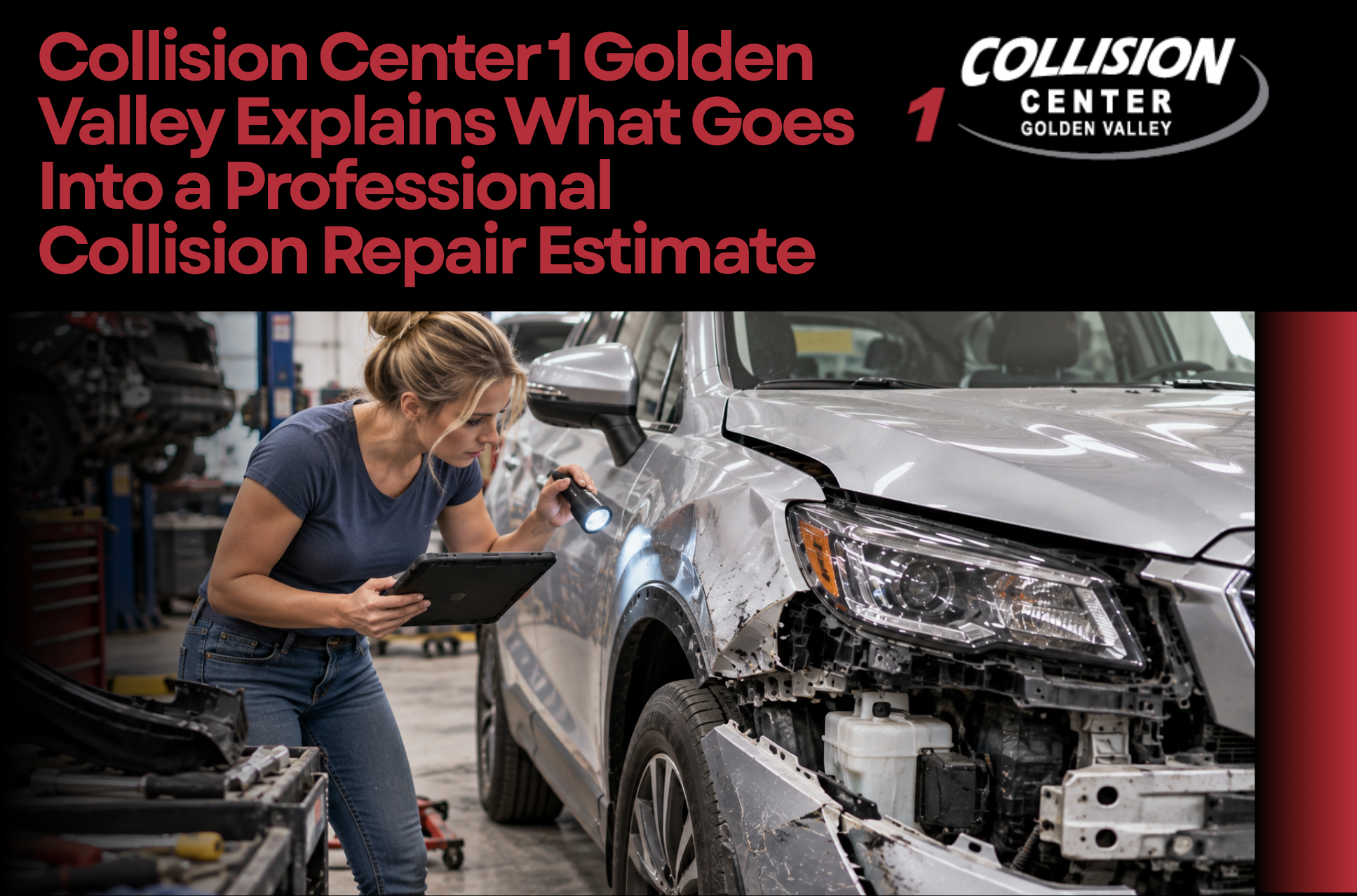
The first area covers documented damage and labor. An estimate begins with conditions technicians can identify during the initial evaluation. Visible dents, cracks, displaced panels, broken components, and changes in panel fit can help determine which areas and operations belong in the initial repair plan.
One of the decisions documented at this stage is whether a damaged component can be repaired or requires replacement. Not every dented panel needs a new part. Repairability can vary according to the component, material, damage location, severity, accessibility, and applicable repair information.
Labor lines can reflect more than the most visible body work. A damaged door, for example, may require removal and installation of related trim, handles, glass-related components, mirrors, or other parts to provide repair access. An estimate can therefore contain several operations associated with one visibly damaged area.
The second area involves replacement parts. When a component cannot appropriately be repaired, the estimate can identify the replacement part and related installation operations.
Parts descriptions may also distinguish among original equipment manufacturer components, other replacement parts, and recycled original equipment components, depending on the repair circumstances. The appropriate option can vary based on the vehicle, repair requirements, availability, and other factors relevant to the repair plan.
Through collision repair services, parts decisions become one element of the complete repair rather than a stand-alone cost.
The third area is refinishing. Conventionally repaired exterior panels may require surface preparation and refinishing after body work is completed. Replacement exterior components can also require preparation and refinishing.
Depending on the vehicle finish and repair area, an estimate may include blending into an adjoining panel. An adjoining panel listed under refinishing does not necessarily mean that panel sustained the same collision damage. It may be included as part of creating an appropriate transition between newly refinished and existing surfaces.
Removal and installation operations can also support this work. Trim, moldings, handles, lamps, liners, mirrors, and other components may need to be removed to provide repair or refinishing access without requiring replacement themselves.
The fourth area involves supplemental changes. An initial estimate reflects damage that can reasonably be identified before repair work and necessary disassembly provide additional access.
Bumper covers, liners, trim, lamps, and other components can conceal attachment points or adjoining areas. If additional collision-related damage is documented after those components are removed, the repair plan can be updated through a supplement.
A supplement may add necessary parts, labor, or procedures based on newly documented conditions. It does not automatically indicate that the original estimate was incorrect. It reflects information that became available as technicians gained access to the affected area.
The fifth area covers vehicle-specific procedures. Modern vehicles can use different materials, joining methods, structural designs, and electronic systems. Repair requirements can therefore vary by make, model, model year, component, and the work being performed.
Depending on the individual vehicle and repair, applicable manufacturer repair information may identify procedures related to component repair, structural evaluation, diagnostics, sensor positioning, or calibration. The presence of cameras, radar, or parking sensors does not mean every collision requires the same electronic procedures.
Through auto body repair services, the physical repair and refinishing operations can be incorporated into the overall repair plan along with any applicable vehicle-specific requirements.
Insurance involvement is separate from understanding the physical repair. When a claim is involved, an insurer may prepare an estimate or review repair documentation. Coverage and payment depend on the applicable policy and claims process, while the repair estimate documents the operations associated with the damaged vehicle.
Drivers should also avoid treating labor hours as a direct measure of calendar repair time. Parts availability, claim communication, repair sequencing, supplemental damage, and applicable vehicle-specific procedures can affect scheduling.
The October guidance provides a simpler way to review an estimate: identify what is being repaired, what is being replaced, which areas require refinishing, whether the plan changed after additional inspection, and which vehicle-specific procedures are included.
The central takeaway is that a collision repair estimate is more than a total price. It is a documented repair plan showing the parts, labor, refinishing, and procedures associated with the damage identified on the individual vehicle.
Collision Center 1 Golden Valley is located at 900 Florida Ave S, Golden Valley, MN 55426. The facility provides auto body and collision repair services for Golden Valley-area drivers as part of Collision Center 1.
###
For more information about Collision Center 1 Golden Valley, contact the company here:
Collision Center 1 Golden Valley
Jerald Stiele
(763) 541-9727
layres@collisioncenter1.com
900 Florida Ave S, Golden Valley, MN 55426