Yonder Identifies 3 'Logistical Ripple Effects' Threatening 2026 Travel
PR Newswire
MINNEAPOLIS, April 28, 2026
MINNEAPOLIS, April 28, 2026 /PRNewswire/ -- With the average cost of a summer trip jumping 48% over last year, travelers are facing a high-stakes season. While safety headlines dominate the news, it's the secondary logistical ripple effects that are quietly derailing itineraries. Today, Yonder Travel Insurance is releasing new data and expert guidance to help travelers navigate these hidden risks before they leave home.
With nearly 50% more money on the line for Yonder customers, the financial risk of a trip being interrupted or cancelled is higher than ever. Protecting these increased costs has become a top priority for savvy travelers who can't afford to lose their investment.
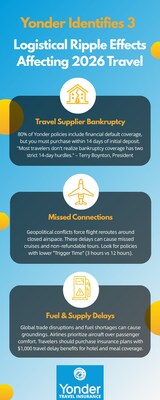
Greater Supplier Bankruptcy Risks
As economic pressures mount on travel providers due to fluctuating fuel costs and shifting demand, the risk of financial default has become a primary concern.
Data from Yonder shows that 80% of the policies curated on their platform include coverage for the financial default of a travel supplier. However, their experts warn that this coverage is highly time sensitive.
"Most travelers don't realize that bankruptcy coverage has two strict 14-day hurdles," says Terry Boynton, President of Yonder Travel Insurance. "First, you have to purchase the policy within 14 days of your initial trip deposit. Second, the policy has to be active for at least 14 days before a supplier announces a default. If an airline's already announced it's bankrupt, it's too late to buy coverage for that reason."
Increased Missed Connections
Geopolitical conflict often forces airlines to reroute flights around closed airspace, leading to longer flight times and significantly tighter connections. In this environment, a 3-hour delay that used to be a minor inconvenience can now cause a traveler to miss a cruise departure or a non-refundable tour.
Yonder experts advise travelers to look closely at the "Trigger Time" of a policy. In a volatile environment, a policy that triggers after 3 hours of a missed connection is significantly more valuable than one that requires a 12-hour delay. Prioritizing plans with lower time frames helps travelers recover the high costs of catch-up travel.
Fuel and Supply Chain Delays
Global trade disruptions and fuel shortages are increasingly causing greater delays and displacement. When a flight is grounded due to a lack of fuel or parts, the airline's priority is the aircraft, not the traveler's comfort. These delays often leave passengers stranded without clear timelines for departure.
"We're recommending that travelers prioritize plans with high travel delay benefits," advises Boynton. "This acts as a cash buffer, allowing you to book your own nearby hotel and meals during a fuel-related grounding rather than waiting in line for an airline voucher that might not be provided."
The experts at Yonder Travel Insurance have poured over hundreds of policies from the best travel insurance providers in the US to provide the best travel insurance recommendation for how YOU travel.
Contact:
Meagan Palmer, Marketing Director
(952-358-6459)
meagan@insureyonder.com
 View original content to download multimedia:https://www.prnewswire.com/news-releases/yonder-identifies-3-logistical-ripple-effects-threatening-2026-travel-302752521.html
SOURCE Yonder Travel Insurance
